Chapter 9
Jarrab and Kanzan
1332–1337 AH
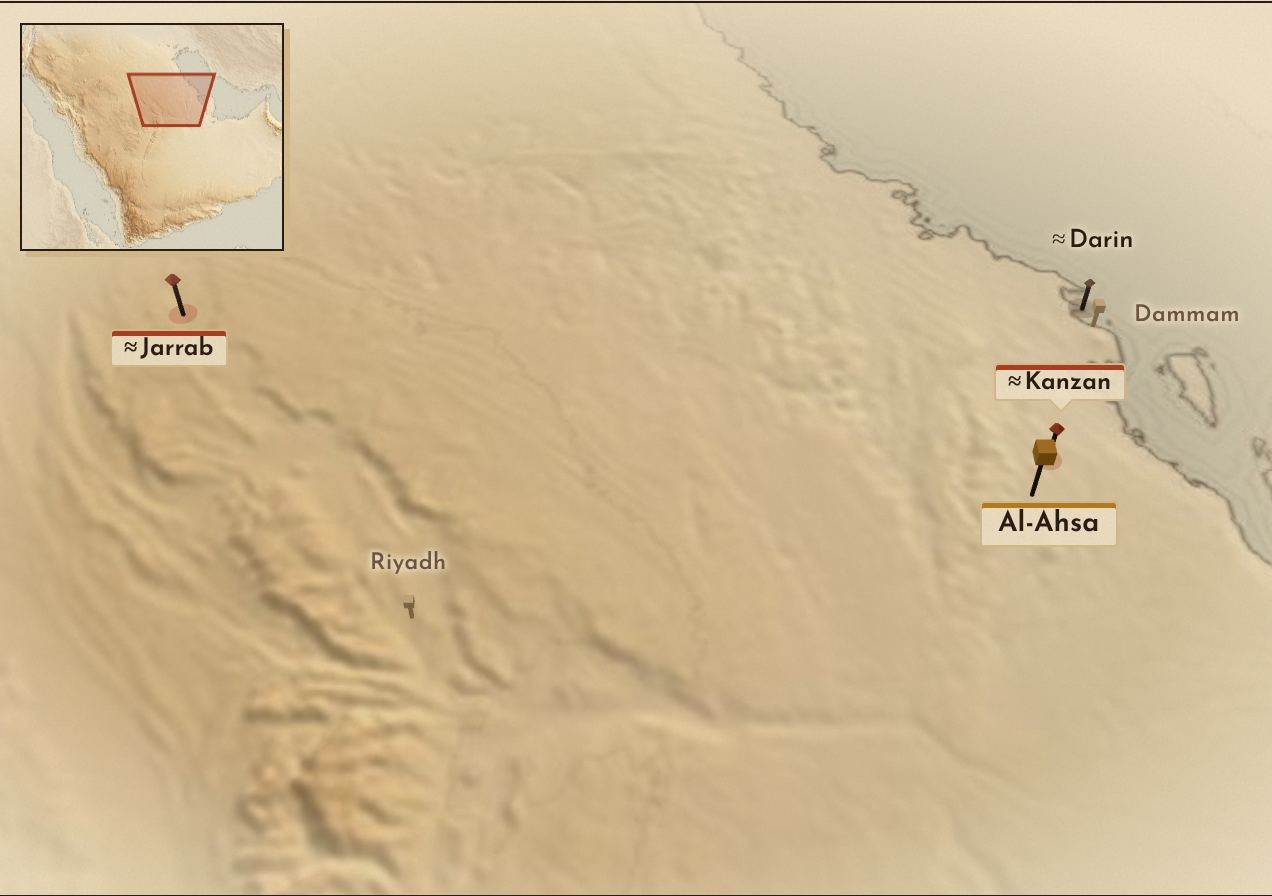
- Battle of Jarrab
- Battle of Kanzan
- Besieged in Al-Ahsa for three months
In Ha’il, the regent Zamil ibn Sibhan was assassinated by Saud Al-Saleh Al-Sibhan, a young member of the same family. Saud Al-Saleh took charge in 1332 AH and placed himself in the hands of the Ottoman state.
Jarrab
It was the time of the First World War. The Ottomans armed Ha’il with longer-range rifles than Abdulaziz’s men had ever faced, and the two sides met at the Battle of Jarrab, about eight years after Al-Tarfiyah.
Among those killed at Jarrab was Captain Shakespeare, the British agent in Kuwait. Abdulaziz had told him to go back to Kuwait, but he stayed, photographing the battle with an old camera. Shakespeare believed that Abdulaziz was the leader Britain should side with. He drafted the terms of the Darin treaty with him, but the treaty was only approved after Jarrab, after his death. Britain had hesitated for fear of provoking the Ottomans. Now it was at war with them and was also backing the Sharif to revolt against them.
As the battle tipped in Ibn Rashid’s favour, one tribe took some camels and withdrew. Both sides then pulled back.
Kanzan
Another battle followed at Kanzan, in the east of the peninsula. There Abdulaziz was badly wounded: a bullet struck the bandolier at his waist and set it off, injuring his abdomen. Recovery took three months. He withdrew to Al-Ahsa and was besieged there for three months, until his brother Mohammad ibn Abdulrahman came from Riyadh and lifted the siege. That same night, to deny his enemies the taste of victory, he announced his marriage.
Later he would surprise Britain again, by bringing in the Americans to look for oil, which shifted the world’s oil balance from Britain to the United States.
After the war
The First World War ended in 1336 AH (1918 AD). Sharif Hussein expelled the last Ottoman garrisons, in Medina and in Asir. In 1337 AH Fakhri Pasha left Medina. He had built up a large store of weapons there and had threatened to blow up the Prophet’s Chamber. All of it fell to the Sharif’s forces.