Chapter 14
Why a Kingdom
Why did Abdulaziz choose a kingdom, at a time when republics were beginning to take shape? One historian argues that monarchies better preserve the rights of citizens, and points to how Saudi Arabia cared for its citizens at home and abroad during the COVID pandemic.
In his view the king stands above all parties and ideologies. He rejects the charge that monarchies are one-man states, pointing out that Hitler, Mussolini and Napoleon, who ruled alone, came to power by overthrowing monarchies. He also points to the Arab Spring, after which, he says, it is the monarchies that still stand and grow. In his view many of the Arab world’s brightest minds came from monarchies and left when their countries became republics.
Titles
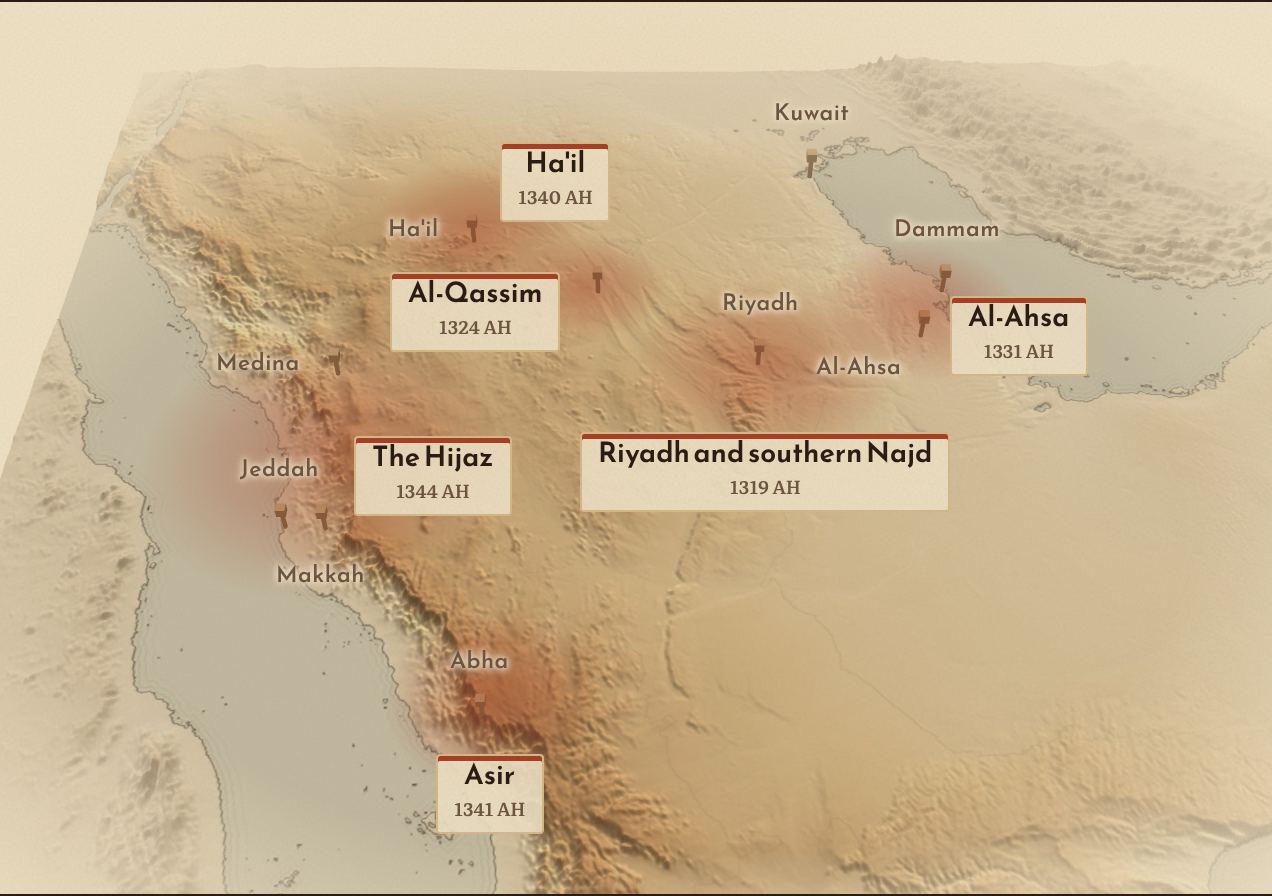
Abdulaziz’s titles grew with his state. Earlier titles included Imam and Emir; after Al-Ahsa, the realm was known as Najd and its Dependencies. The later titles are set out in the previous chapter.
The people around him
Abdulaziz had a gift for recruiting capable people from many countries. Captain Shakespeare stood beside him on the battlefield at Jarrab. Abdullah Philby resigned from his own government’s service to join him. Others included Yusuf Yasin and Hafiz Wahba.
One story shows how he protected those who sought refuge with him. Rashid Ali Al-Gaylani fled Iraq during the Iraqi revolt, went by way of France to Germany, and after Hitler’s defeat in the Second World War came to Abdulaziz’s border seeking refuge, presented at first as a Syrian. Abdulaziz refused to hand him over to Britain, even at the risk of war. Al-Gaylani stayed until Abdulaziz died and King Saud succeeded him, then went to Egypt and later back to Iraq.